

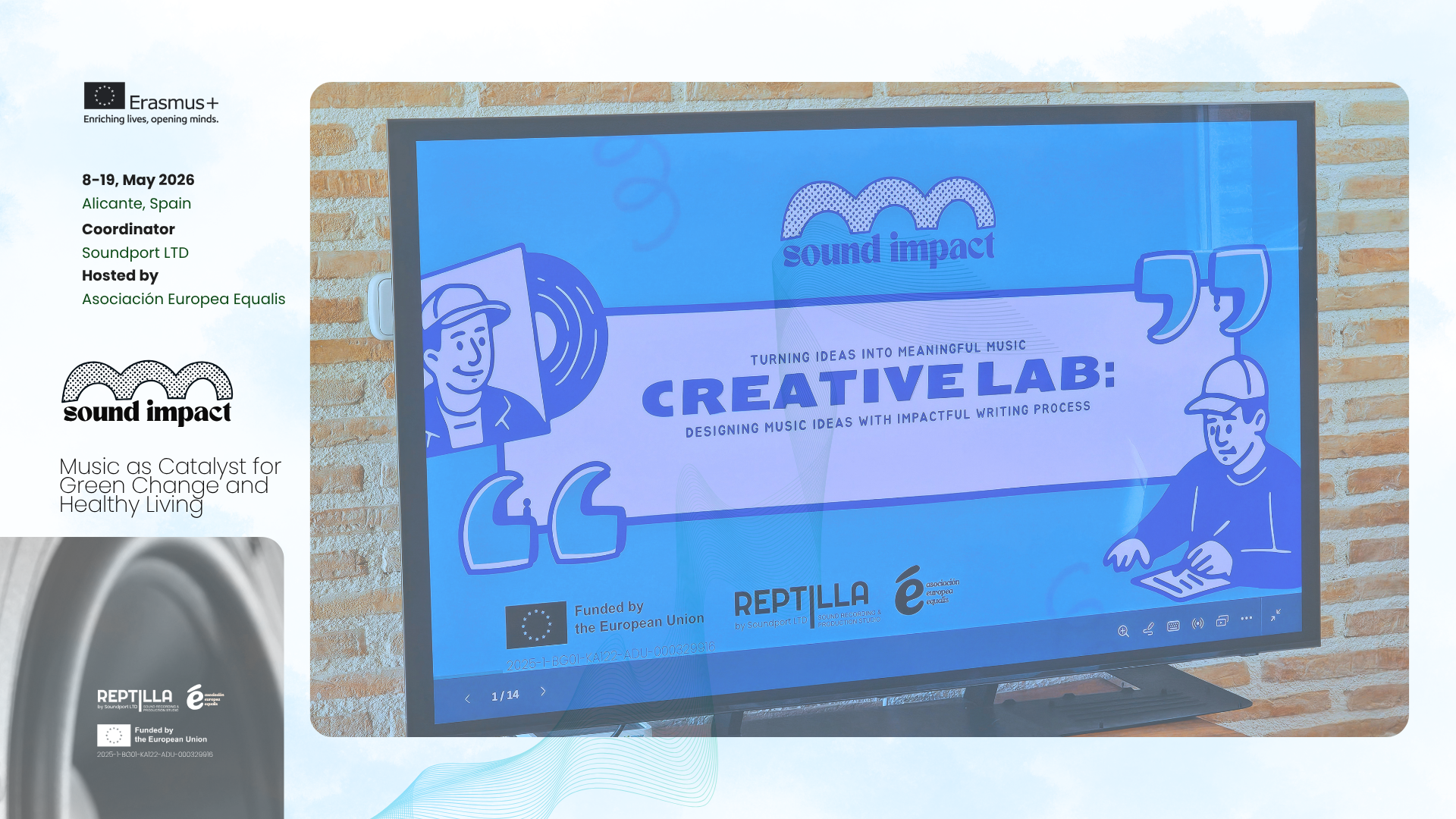
As part of the Sound Impact: Music as Catalyst for Green Change and Healthy Living mobility, participants reviewed and presented the music-related ideas they had been developing throughout the duration of the programme.
Working in three teams, the participants used the mobility sessions to shape concepts that combine sustainability, creativity, education and audience engagement. Each team explored how music and creative tools can be used to inspire more responsible behaviour and make climate-conscious thinking more accessible to different audiences.
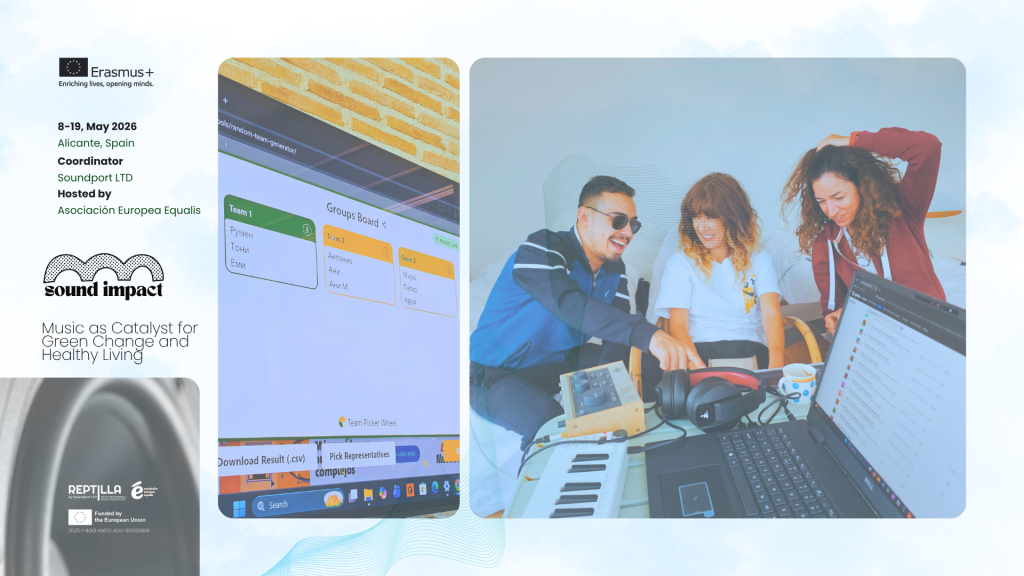
As a result, the participants developed three very different but equally engaging ideas. The first team created an interactive educational song for children, designed to share sustainability messages in a playful and memorable way. The second team developed another children-focused concept featuring three mascots dedicated to cleaning the planet, using characters and storytelling to make environmental action more relatable and fun. The third team designed an app concept for calculating carbon emissions, helping users better understand their personal or professional environmental footprint.
What made the session especially meaningful was the enthusiasm of the participants. The ideas were not treated simply as workshop exercises; many participants expressed genuine motivation to continue developing them beyond the duration of the mobility. This showed that the training supported not only learning during the project, but also longer-term creativity, initiative and climate-conscious thinking.
After the peer presentations, participants took part in the Green Music Quiz, testing their knowledge of sustainability in the music industry, greenwashing, carbon-neutral claims, digital impact, sustainable events and responsible creative practices. The quiz created a lively and enjoyable atmosphere, combining learning with humour, discussion and friendly competition.
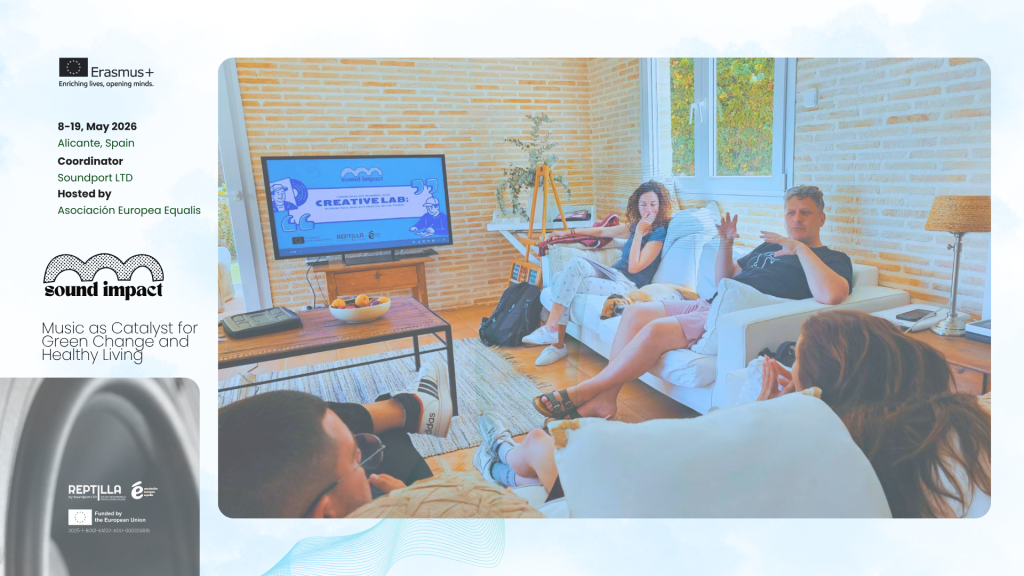
The activity demonstrated how music can become a tool for education, awareness and positive change. By connecting artistic thinking with sustainability, the participants showed that even small creative ideas can carry strong messages and inspire action.
Funded by the European Union under the Erasmus+ Programme.
Project No. 2025-1-BG01-KA122-ADU-000329916
Views and opinions expressed are, however, those of the author(s) only and do not necessarily reflect those of the European Union or the European Education and Culture Executive Agency. Neither the European Union nor the granting authority can be held responsible for them.
Leave a Reply